Sleeve Gastrectomy (LSG)
 Eating after Sleeve Gastrectomy Eating after Sleeve Gastrectomy
Your Liver Shrinkage diet prior to surgery (Diet Option)
Slimfast Liver Shrinkage Diet
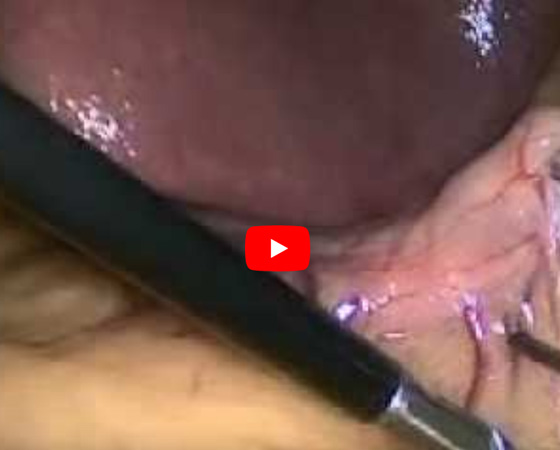
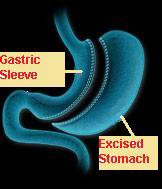 In this procedure, the surgeon creates a narrow tube and removes the remainder of your stomach. Hence, the capacity of the new stomach is much smaller than the original. It is usual to offer this operation as a first stage procedure to super obese patients – a second stage bypass procedure is then offered after the patient has lost some of the excess weight to make this type of surgery safer. In a small number of patients, a sleeve gastrectomy may be the only operation that is required. Unfortunately, there is evidence that 50% of patients may regain significant weight 5 year after surgery - this is because the “sleeve” stretches over time and can therefore hold more food. However, the operation can be repeated and extra stomach trimmed away or a gastric bypass / duodenal switch performed or a gastric band added to maintain long-term weight control. In this procedure, the surgeon creates a narrow tube and removes the remainder of your stomach. Hence, the capacity of the new stomach is much smaller than the original. It is usual to offer this operation as a first stage procedure to super obese patients – a second stage bypass procedure is then offered after the patient has lost some of the excess weight to make this type of surgery safer. In a small number of patients, a sleeve gastrectomy may be the only operation that is required. Unfortunately, there is evidence that 50% of patients may regain significant weight 5 year after surgery - this is because the “sleeve” stretches over time and can therefore hold more food. However, the operation can be repeated and extra stomach trimmed away or a gastric bypass / duodenal switch performed or a gastric band added to maintain long-term weight control.
Advantages
- Helps improve health problems as shown in table 1 and 2 above (Page 6 and 7)
- You can expect to lose roughly 50-70 % of your excess weight, provided you follow the dietary advice
- The amount of solid food that can be consumed at a meal is restricted
- Food passes through the digestive tract in the usual order, allowing it to be absorbed fully by the body
Disadvantages
- Successful weight loss requires life-long adoption of healthy eating and self-control
- The sleeve gastrectomy will eventually fail if you continue to force yourself to eat large meals
- You may struggle to eat particular types of food, especially bread and meat
- Weight loss is slower than that following Roux-en-Y gastric bypass surgery
- The risk of a leak at the staple line is greater
You will need to have the FREE Adobe Acrobat Reader installed on your system to view this document. Download the Reader by clicking on the Acrobat icon below.

|